The Sims 3 Open World — Put a Bow on It
Created by the Sims 3 design team
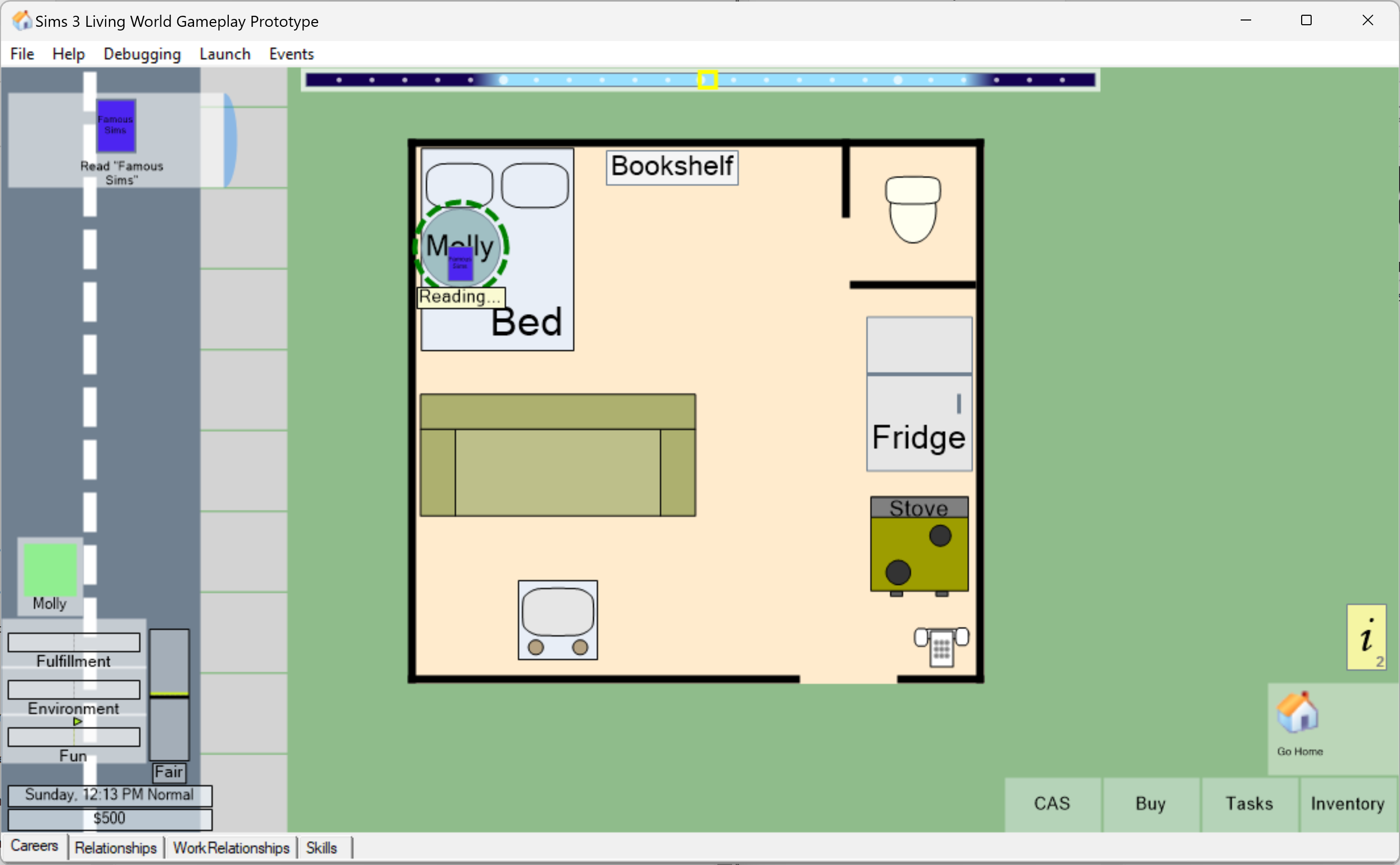
The Living World Gameplay Prototype created during early Sims 3 development was notable in that it unified several smaller prototypes and other proposed systems into a full featured, fully playable version of a potential Sims 3. Traditionally, I wouldn’t spend time actually building out the entire experience, as it was mostly redundant given that each individual system would be minimally altered and all of the heavy lifting would be “wasted” integration work. In this case though, there were several reasons that it made sense.
First and most importantly, The Sims is very much a “whole is greater than the sum of its parts” sorta jam. Most of the individual systems in a Sims experience are relatively simple. The magic of The Sims lies in the combinatorics of those simple, understandable systems bouncing off of each other, often in unpredictable or unexpected ways. This meant that even though a new system might work in isolation, we really needed to integrate them into a “whole” in order to be certain that the individual systems were serving their respective purposes.
Second and very geekily, I have an unhealthy affection for C# (an efficient but forgiving programming language that’s been around for decades and is particularly easy to work with). All of our prototypes were created in C#, and I felt that as we grew the team, C# would be both a skill that people were likely to already have and also a skill that would be transferrable and hence attractive to prospective engineers.
I also had originally wanted to formally open the entire game to community modding. The scripting used for gameplay previously was extra very entirely “internal”. I felt that C# would be far more practical for modding. There’s a ton of C# code out there to learn/borrow from, and we could design and build a proper “Sims SDK” that made things clean and was built for that specific purpose. This meant that the theoretical upper limit of what we could allow players to create was everything that the team itself had made.
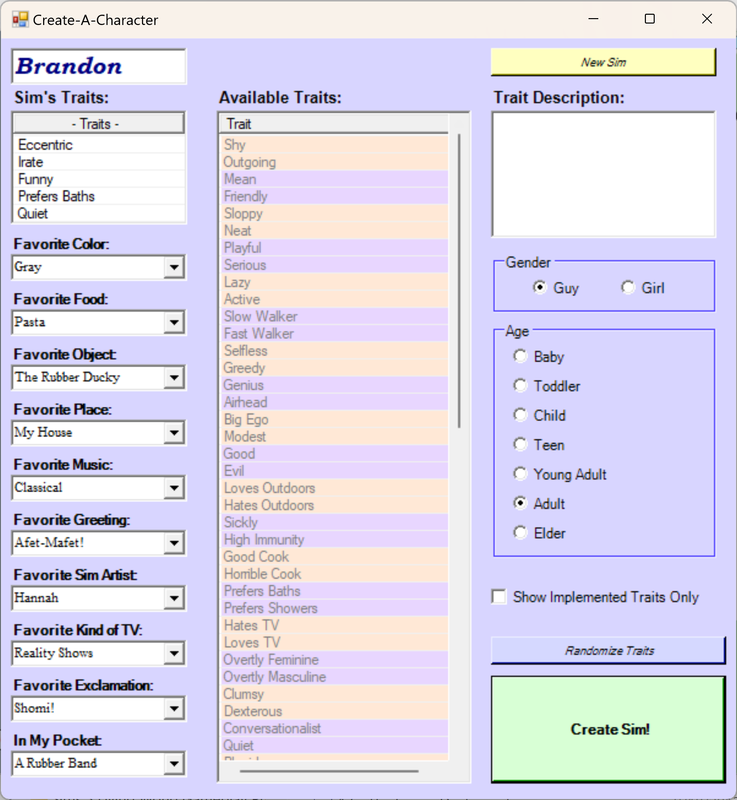
Building a larger unified prototype also allowed us to integrate designs that were impractical to prototype in isolation. The image to the right shows the prototype Create-A-Sim interface with an early incarnation of personality traits as well as the concept of “favorites” (which was later cut). Personality traits were one of our favorite new designs and were pretty central to player expression and to the new simulation, but they didn’t do anything at all by themselves without the rest of the game to modulate.
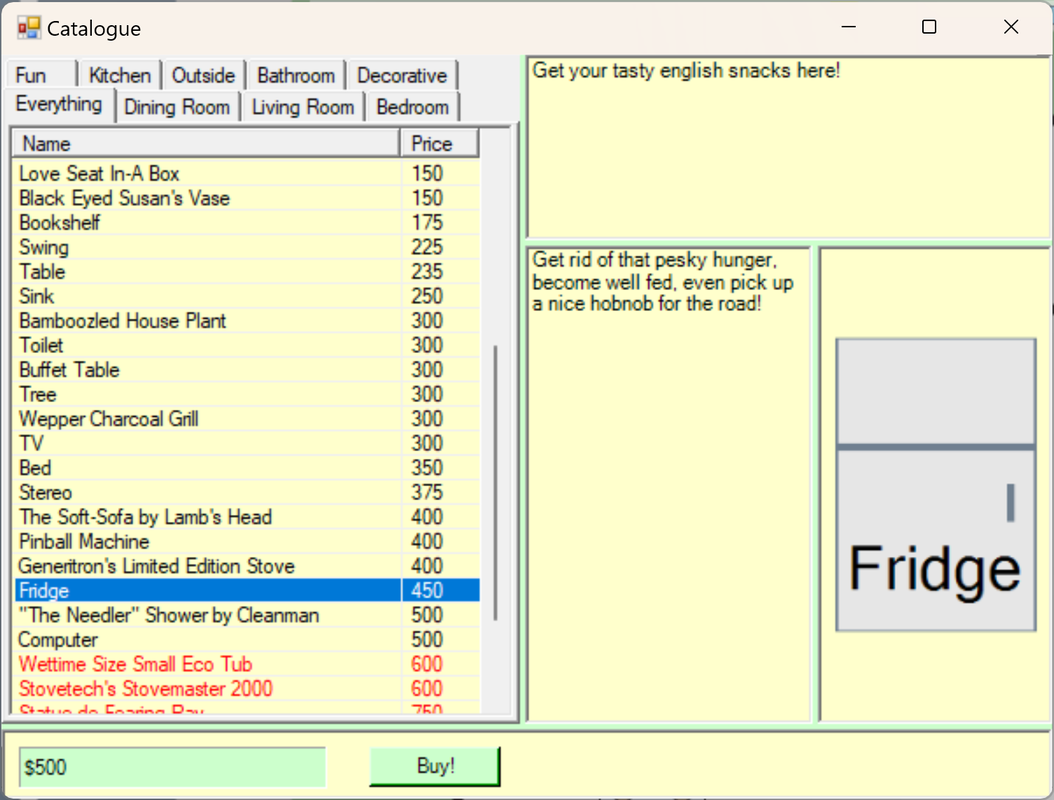
Along similar lines, we needed money to matter in order for players to have any motivation to make hard choices and to drive the “conflicts” that are often critical to interesting emergence. To that end, even though buying furniture and whatnot wasn’t in itself something that needed prototyping, we needed the buy catalog to “close the loop” on other systems. Build mode, however, was not part of this prototype — it serves a largely cosmetic role outside of hardcore min-maxing.