Dragon Lord: A Lesson in Spell-crafting and the Raising of Dragons
Dragon Lord was a strategy RPG game released in the early 90s for the Amiga, Atari ST and PC. The pacing was extremely slow by modern standards, and the spell-crafting mechanic slowed it down even further. But that spell-crafting was special.
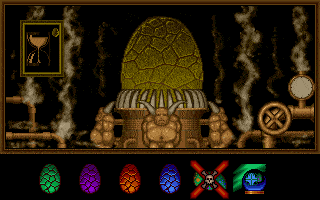
In the game, you played as a dragon lord. You craft spells from various reagents, apply them to dragon eggs that you raise to influence their development and stats, then you attack the other dragon lords’ towns with your sweet ass dragons. The core noodling mechanic revolved around crafting spells.
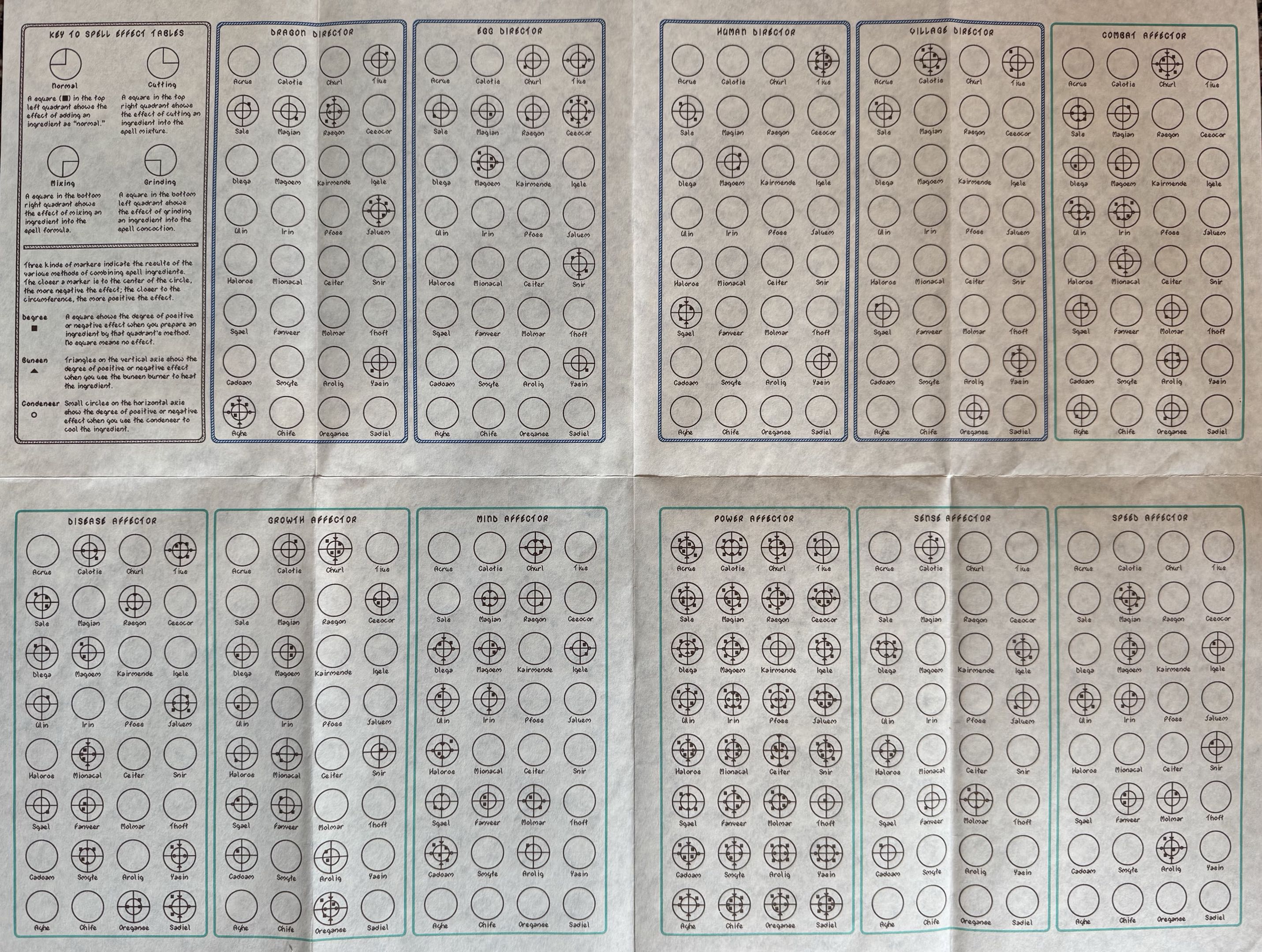
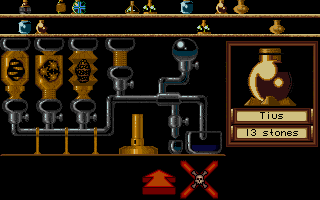
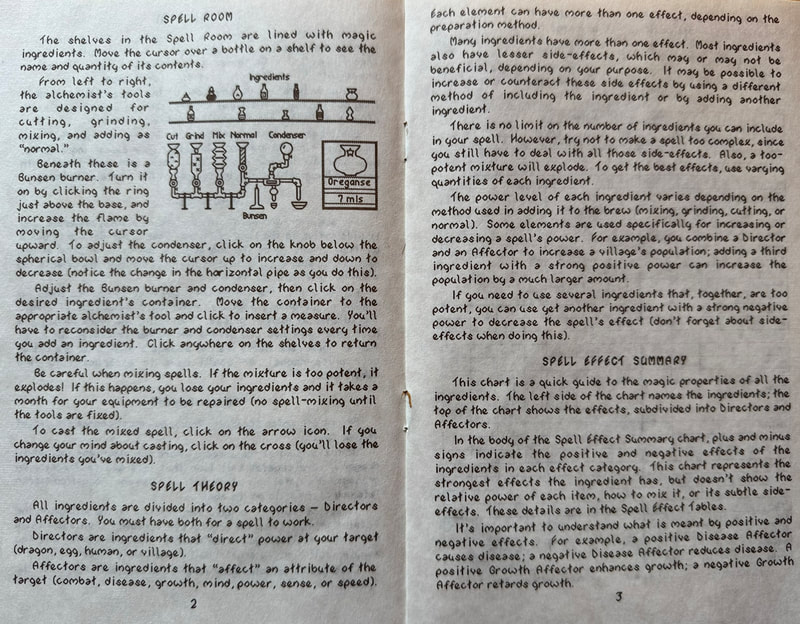
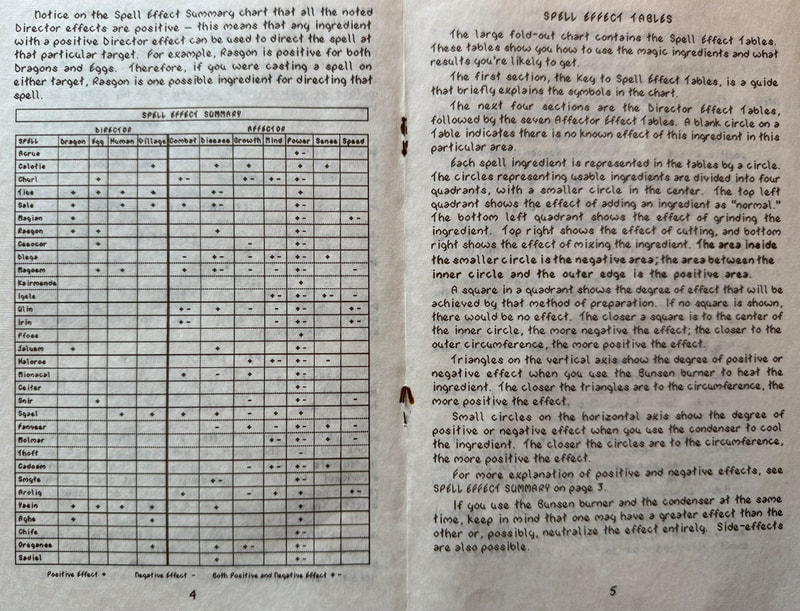
Essentially, you choose individual ingredients from a set of 32 then manipulate (cut, mix, or grind) and treat (heat or condense) them in various ways to create a “spell” with various effects. Each ingredient had a “profile” that governed how each form/treatment of the ingredient would contribute to the final result. Most ingredients would have varying degrees and polarity of effect on multiple aspects of a dragon.
For example, if you grind Haloros, it will slightly boost your dragon’s size (growth), but it will also have a slightly negative effect on power. You could then balance that out with some Magia (power++, no effect on growth), or if you had some Calotis, you could cut it up and avoid any negatives and get a small boost to “sense” as well. You could noodle on that chart forever looking for the clever combination of prepared and treated ingredients that give you the dragon you want with the least penalties.
Generally, I come back to this mechanic as part of what I call “long tail designs”. By that I mean designs that are chunky and ham-handed on the surface and can be played fairly effectively without nutball engagement, but where, if you do dig in and obsess a little bit, you can really dial it in and min/max things in a satisfying way. Usually that’s a matter of tuning. The chunky layer(s) might account for 80–90% of the swing in the outcomes while the geeky min/max “tail” accounts for the remaining 10–20%.
A good example of this is cooking in The Sims 3. The core of cooking in that game was notably more involved than it had been in previous outings, requiring ingredient management and more attention to quality in exchange for providing a much greater variety of dishes and more nuanced player agency over the results. But players could also just buy ingredients and cook them casually. Players who really wanted to nerd out could grow and catch their own ingredients, progressing fishing and gardening skills and providing higher quality and more exotic ingredients.
Some recipes even had an easter-eggy effect: having produce in your inventory when you go to space (top level science career) could result in produce coming back with a “been to space” modifier—e.g. “space apples”. This in turn meant that you could now make Space Apple Pancakes, and that makes me happy on the inside.